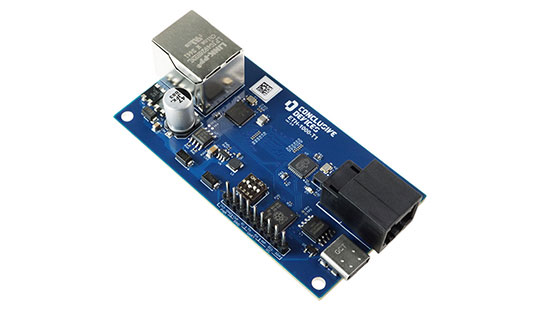
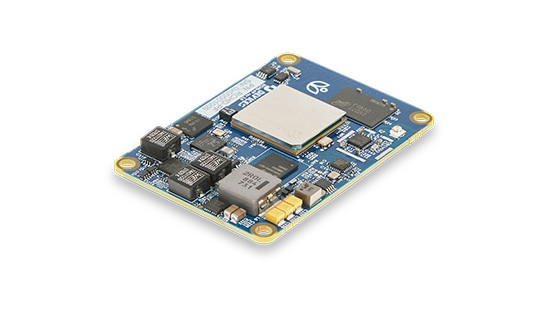
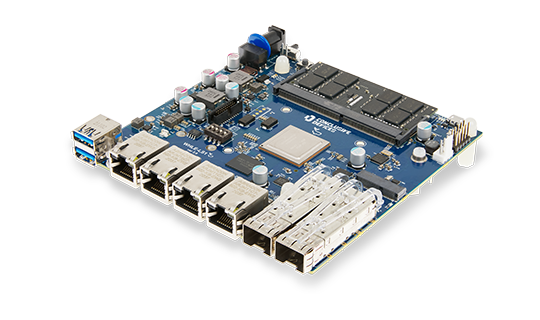
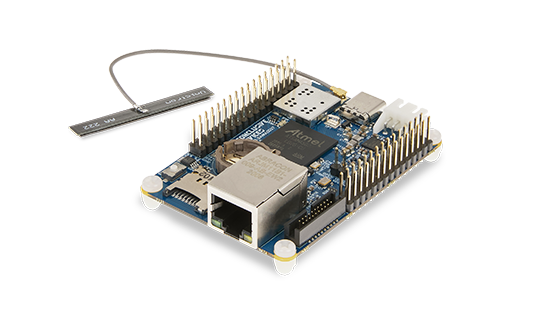
A Board Support Package (BSP) is the hardware-specific software and configuration needed to boot an operating system and make it work reliably on a particular board. In an embedded Linux product, the BSP usually connects the processor, memory, boot storage and peripherals to the bootloader, kernel and operating-system build. It may include boot firmware, U-Boot configuration, kernel patches, device drivers, Device Tree files, build-system metadata, image recipes, test assets and release documentation.
The definition is simple; the engineering responsibility is not. A BSP becomes the foundation beneath every application on the device. If it is difficult to reproduce, tied to an obsolete vendor kernel or poorly documented, the product inherits those constraints. For CTOs and engineering leads, BSP development therefore involves more than initial board bring-up. It also requires an explicit plan for security updates, hardware revisions, regression testing, intellectual-property access and long-term ownership.
What Does a Board Support Package Contain?
There is no universal BSP archive format. Its exact contents depend on the processor, board, operating system and build framework. A production Linux BSP commonly includes the following elements:
| BSP element | Purpose |
|---|---|
| Boot firmware | Initializes early CPU, memory and security functions; this may include vendor firmware or projects such as TF-A |
| Bootloader | Loads the kernel, Device Tree and initial filesystem; also supports recovery, update and secure-boot flows |
| Linux kernel | Provides scheduling, memory management, networking and core hardware support |
| Kernel configuration and patches | Select features and carry board- or product-specific changes not present in the chosen upstream kernel |
| Device drivers | Control board peripherals such as Ethernet PHYs, CAN controllers, displays, sensors and custom FPGA blocks |
| Device Tree files | Describe non-discoverable hardware, including buses, addresses, interrupts, clocks, regulators and pin multiplexing |
| Build-system metadata | Defines machine configuration, recipes, packages, toolchain settings and image composition in Yocto, Buildroot or another framework |
| Root filesystem integration | Supplies libraries, system services, permissions, networking defaults and other platform components required by the product |
| Image and update tooling | Produces flashable artifacts and supports manufacturing, recovery, OTA updates and rollback |
| Tests and documentation | Describe supported hardware, build procedures, known limitations and release acceptance criteria |
The Linux kernel documentation describes Device Tree as a data structure that lets an operating system understand hardware without hard-coding every machine detail. That makes the Device Tree an important BSP component, but it is only one part of the package.
The term BSP is also used outside Linux. An RTOS BSP may provide startup code, interrupt-controller setup, clock initialization, linker scripts and peripheral drivers. A microcontroller SDK may use the term for a board definition, hardware abstraction layer and example configuration. In every case, the BSP adapts a general-purpose software platform to specific hardware.
Vendor BSP vs Product BSP
A semiconductor vendor BSP usually targets an evaluation board and demonstrates the SoC's capabilities. It is a useful starting point, but it is not automatically ready for production. A product BSP must reflect the actual PCB, bill of materials, boot media, security model, power architecture, thermal limits, update mechanism and supported product variants.
This distinction matters when a prototype works on an evaluation kit but the custom board does not. The processor may be identical, yet differences in DDR routing, PMIC sequencing, Ethernet PHY choice, GPIO polarity or storage layout can require substantial engineering.
How BSP Development Works
Board support package development normally progresses from hardware enablement to a controlled production platform.
1. Define the Platform Baseline
The team selects the operating system, kernel branch, bootloader, toolchain and build framework. It also evaluates the silicon vendor's code against upstream support. The newest vendor release is not always the best production baseline: the decision must account for support horizon, security coverage, required peripherals and the cost of carrying downstream patches.
2. Perform Early Board Bring-Up
Engineers first establish observability through serial output, JTAG or another debug interface. They then verify the clock tree, pin multiplexing, power rails, reset lines, DDR and boot storage. A useful sequence is to prove the smallest boot path first, then add interfaces individually. This keeps electrical faults, configuration errors and driver problems easier to isolate.
3. Configure the Bootloader and Kernel
The bootloader must understand the board's memory, storage and boot policy. The kernel configuration must enable the required subsystems without accumulating irrelevant modules. Engineers create or adapt Device Tree descriptions and add drivers only where existing upstream support is insufficient.
The result is a boot flow in which each stage has a clear responsibility:
-
Boot ROM or first-stage firmware selects and authenticates the next stage.
-
The bootloader initializes required hardware and loads the operating-system artifacts.
-
The kernel reads the hardware description and binds drivers to devices.
-
User space starts platform services, middleware and product applications.
4. Integrate a Reproducible Build
Manual build instructions are not a release process. A maintainable BSP pins source revisions, toolchains and configuration; records licenses; produces traceable artifacts; and builds non-interactively in CI. In Yocto, hardware support is normally organized as a BSP layer with machine configuration and recipes. The official Yocto Project BSP Developer's Guide documents this layer structure and the requirements for releasing a BSP.
Teams choosing an image-building framework should also understand the operational differences between Yocto and Buildroot for production BSPs. The right choice depends on product variants, compliance needs, update strategy and internal expertise rather than bring-up speed alone.
5. Validate Production Behavior
Successful boot is only the first milestone. Validation should cover every supported peripheral and operational state, including suspend/resume, watchdog recovery, network stress, storage endurance, thermal conditions and repeated power interruption. Update and rollback behavior must be tested on real hardware. Production images should also disable or control development interfaces according to the threat model.
6. Release and Hand Over the BSP
A BSP release should identify the exact hardware revisions, source commits, toolchain, configuration, patches, binary dependencies and known limitations. It should also include build instructions and evidence from automated and hardware-in-the-loop tests. Without this release discipline, teams cannot reliably reproduce an image months or years later.
Where BSPs Matter in Embedded Products
Automotive and Transportation
An automotive gateway BSP may enable CAN FD, Automotive Ethernet, PCIe, cellular modems, GNSS, secure storage and hardware watchdogs. It must also preserve predictable behavior across cold starts, voltage disturbances and controlled software updates. Changes to the boot chain or kernel can affect cybersecurity evidence and system-level verification, so BSP releases require strong traceability.
Industrial Automation
Industrial controllers often combine long product lifecycles with custom I/O, real-time networking and strict uptime requirements. A maintainable BSP lets the manufacturer replace an obsolete component, introduce a board revision or patch a kernel vulnerability without rebuilding the entire platform informally.
Medical Devices
In a medical device, the BSP sits beneath validated application software. Kernel, driver or toolchain changes may require impact analysis and regression testing. The project therefore benefits from controlled dependencies, documented interfaces and a defined maintenance policy rather than ad hoc vendor drops.
IoT and Edge Devices
IoT gateways may need Wi-Fi, Bluetooth, cellular connectivity, secure boot, remote diagnostics and fail-safe OTA updates. Their public exposure makes BSP security maintenance especially important. A device can run unchanged application code while remaining vulnerable because of an outdated kernel, bootloader or low-level library.
BSP vs Device Driver vs Firmware vs Operating System
These terms overlap, but they are not interchangeable.
| Term | Scope | Hardware specificity |
|---|---|---|
| BSP | Complete enablement and integration baseline for a board and OS | High |
| Device driver | Code that controls one device or subsystem | High for the device, but not necessarily one board |
| Firmware | Low-level code stored on or delivered to a device or component | Usually high |
| Operating system | General runtime environment for processes, memory, devices and services | Usually broader than one board |
| SDK | Tools, headers, libraries and examples for developing software against a platform | Varies |
A driver can be part of a BSP, but a driver alone does not define the boot chain, machine configuration, image build or release policy. Similarly, the kernel is part of many Linux BSPs, but the BSP is the board-specific integration of that kernel with the rest of the platform. For a broader distinction between low-level and application code, see Firmware vs Software.
BSP Maintenance: Why Bring-Up Is Not the Finish Line
The BSP must evolve for as long as the product remains supported. Typical maintenance work includes:
- triaging kernel, bootloader and user-space vulnerabilities;
- updating vendor firmware and binary components;
- backporting security and reliability fixes;
- adapting drivers to kernel changes;
- supporting new PCB revisions and component substitutions;
- maintaining build hosts, mirrors, toolchains and CI runners;
- regenerating SBOM and license reports;
- validating OTA compatibility and rollback;
- running regression tests across every supported hardware variant.
Out-of-tree kernel code deserves particular attention. Linux deliberately does not promise a stable internal driver API, so an external driver can require changes when the kernel moves forward. The official Linux kernel driver-interface guidance explains why upstream drivers are maintained more effectively when internal interfaces change. Upstreaming is not possible for every product-specific feature, but minimizing the downstream patch set generally reduces upgrade cost.
Security maintenance also needs an operating process, not only a scanner. The team must determine whether a reported CVE affects the compiled configuration and deployed use case, identify an appropriate fix, rebuild the complete image and validate it. Yocto's official vulnerability-checking documentation provides one example of integrating CVE information into the build workflow.
Who Should Own the BSP?
The product company should retain effective control of the production BSP even when a semiconductor vendor, ODM or engineering partner performs most of the development. Effective control means the company can access, build, test, release and maintain the platform without depending on undocumented knowledge or an unavailable third party.
Ownership should be defined across several areas:
| Ownership area | Decision that must be explicit |
|---|---|
| Source and access | Who controls repositories, branches, submodules and issue history? |
| Intellectual property | Which files are proprietary, open source, vendor-licensed or redistributable? |
| Build environment | Can the customer reproduce releases from documented inputs? |
| Release authority | Who approves a BSP version for manufacturing and field deployment? |
| Security response | Who monitors advisories, assesses exposure and delivers fixes? |
| Hardware changes | Who updates the BSP when the PCB or bill of materials changes? |
| Upstream strategy | Who submits, reviews and maintains changes in external projects? |
| Test infrastructure | Who owns test plans, fixtures, lab access and CI credentials? |
| Signing and deployment | Who controls production keys, artifact signing and update channels? |
| End of engagement | What source, documentation and knowledge-transfer package must be delivered? |
Never treat possession of a source archive as sufficient ownership. A useful handover also includes build manifests, patch provenance, binary-blob licenses, factory-flashing instructions, test automation, release history and open-defect records. Contracts should define maintenance scope, response times, supported branches and end-of-life conditions. Production signing keys should remain under the product owner's security controls, even if a supplier integrates the signing workflow.
BSP Ownership Models
| Model | Advantages | Main risk |
|---|---|---|
| Fully in-house | Maximum knowledge and direct control | Requires sustained specialist capacity |
| Outsourced development with customer-controlled repositories | Adds specialist capacity while preserving continuity | Needs disciplined documentation and review |
| Supplier-controlled BSP | Low initial internal workload | Creates dependency and can weaken exit options |
| Shared maintenance | Combines product knowledge with BSP expertise | Responsibilities can become ambiguous without a clear RACI |
For many product companies, the most resilient arrangement is customer-controlled source and release governance combined with specialist external development. The partner can perform board bring-up, driver work, upstreaming and long-term maintenance, while the customer retains access, approval authority and security control.
Board Support Package Best Practices
- Start with an upstream assessment. Identify what already exists in the mainline kernel and bootloader before adopting a large vendor fork.
- Separate SoC, board and product policy. Clean layers reduce duplicated changes across hardware variants.
- Pin every release input. Record source revisions, configurations, toolchains, patches and binary firmware versions.
- Keep the downstream patch set small. Follow relevant upstream conventions; U-Boot publishes practical best practices for board ports.
- Automate builds and hardware tests. Every release candidate should be reproducible in CI and verified on representative boards.
- Map software to hardware revisions. Prevent incompatible images from being installed on the wrong variant.
- Design update and recovery early. Test signed images, interrupted updates, rollback and factory recovery before production.
- Generate security and compliance evidence. Maintain SBOMs, license reports, vulnerability decisions and patch records.
- Document ownership. Name maintainers, approvers, repositories, supported versions and escalation paths.
- Budget for the product lifetime. BSP maintenance is a continuing engineering function, not a prototype expense.
Common BSP Mistakes
- Shipping an evaluation-board BSP unchanged. Reference code may contain unused services, debug settings, old patches or assumptions that do not match the product.
- Calling the project complete when Linux boots. Peripheral stress, power management, recovery and update behavior still require validation.
- Accumulating undocumented patches. Each downstream change increases future kernel migration and security-maintenance effort.
- Depending on one engineer's workstation. If only one environment can reproduce the image, the product has a continuity risk.
- Ignoring hardware revision control. Small component substitutions can alter timing, reset behavior, Device Tree data or driver requirements.
- Leaving maintenance responsibility vague. Vulnerabilities and vendor updates go unhandled when no owner has an agreed response process.
- Confusing file delivery with knowledge transfer. Source without build, test, release and licensing context is not a maintainable BSP.
BSP Release and Ownership Checklist
- Supported board and BOM revisions are identified.
- Kernel, bootloader, toolchain and build-system versions are pinned.
- All patches have purpose, origin, license and upstream status recorded.
- Production images build automatically from a clean environment.
- Peripheral, stress, update and recovery tests run on real hardware.
- SBOM, license and vulnerability reports are generated for releases.
- Repository access and release authority are documented.
- Production keys are controlled by the product owner.
- Security monitoring and patch response have named owners.
- Maintenance horizon and end-of-life policy are agreed.
- A supplier exit or handover package is defined and tested.
Frequently Asked Questions About BSPs
Is a BSP the same as a Linux distribution?
No. A distribution includes broad user-space packages and policy. A BSP provides the hardware-specific integration required to run that distribution or another operating-system image on a particular board.
Is the bootloader part of the BSP?
Usually, yes. In many embedded Linux projects, the BSP includes the bootloader configuration and patches because they are required to initialize the board and load the kernel. Commercial packaging may separate it, but the lifecycle still needs coordinated management.
Does every custom PCB need a custom BSP?
Most custom processor boards need at least BSP adaptation. The effort may be small when the design closely follows a supported reference board and uses upstream drivers. It grows when the board introduces different memory, power sequencing, boot storage or unsupported peripherals.
How long does BSP development take?
It depends on SoC support, board complexity, driver availability, security requirements and the definition of "done." Initial boot may take days or weeks on well-supported hardware; production qualification, update integration and missing-driver development can extend the work substantially. Estimate milestones separately rather than treating first boot as project completion.
Can a BSP be maintained without changing the application?
Often, but not always. Stable user-space interfaces can isolate applications from many BSP updates. Changes to device nodes, libraries, graphics stacks, timing or driver behavior may still require application regression testing.
Should a company own its BSP source code?
The company should at least have the rights and practical capability needed to reproduce, deploy and maintain its production platform. Exact copyright ownership varies by contract and open-source license. Operational control, complete access and a tested handover path are essential even when development is outsourced.
When should a BSP be upgraded?
Upgrade when the current baseline can no longer meet security, hardware-support, compliance or product requirements. Plan migrations before a vendor or community branch reaches end of life. Avoid unnecessary churn, but do not remain indefinitely on an unsupported kernel merely because it still boots.
Conclusion
A BSP is the hardware enablement and integration foundation that turns a processor board into a supportable product platform. It includes more than drivers: the boot chain, kernel, hardware description, build metadata, image generation, tests and documentation all contribute to a production Board Support Package.
The strongest BSP strategy addresses development, maintenance and ownership together. Use upstream components where practical, build reproducibly, validate on real hardware, control the security and release process, and define responsibility for the full product lifetime. These decisions reduce dependency on individual developers or vendor snapshots and make future board revisions and software updates manageable.
Conclusive Engineering provides Linux BSP development services covering board bring-up, bootloader and kernel integration, driver development, security hardening and long-term maintenance. If your team is moving from an evaluation kit to custom hardware, inheriting an unsupported BSP or planning a kernel migration, contact us to define a maintainable production baseline and ownership model.
Suggested Outreach After Publication
Share the article with embedded Linux communities, Yocto and U-Boot practitioners, hardware-design publications and engineering forums where teams discuss board bring-up, vendor BSP limitations and long-term kernel maintenance. Position it as a practical reference on BSP ownership and lifecycle planning rather than as a product announcement.