In modern embedded systems design, choosing between a System on Module (SoM) and a System on Chip (SoC) is a critical architectural decision. Both approaches aim to integrate processing capabilities into compact, efficient solutions, but they differ significantly in terms of integration level, flexibility, development effort, and scalability.
A System on Chip (SoC) integrates all major system components (CPU, GPU, memory controllers, and peripherals) onto a single silicon die. In contrast, a System on Module (SoM) packages an SoC together with essential supporting components (RAM, storage, power management) on a ready-to-use module.
Are you looking for professional-grade electronic hardware?
Visit Conclusive Engineering storeTechnical Explanation: What is a System on Chip (SoC)?
A System on Chip is a highly integrated semiconductor device that combines multiple system components into a single chip. Typical SoC components include:
- CPU cores (ARM, RISC-V, etc.)
- GPU or AI accelerators
- Memory controllers
- Communication interfaces (SPI, I2C, UART, PCIe)
- Networking (Ethernet, Wi-Fi, Bluetooth)
- Security modules
Key characteristics:
- Extremely compact
- High performance and low latency
- Optimized power efficiency
- Requires external components (RAM, PMIC, storage)
Designing with an SoC means building a custom PCB around it, handling high-speed routing, power sequencing, and signal integrity.
What is a System on Module (SoM)?
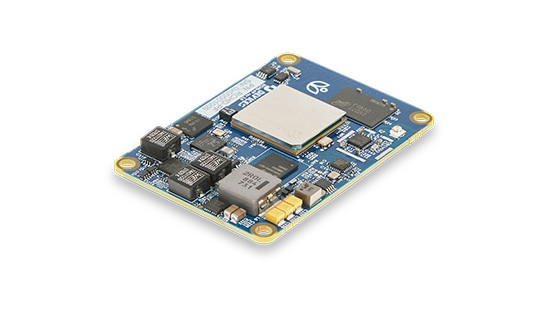
A System on Module integrates an SoC with all essential supporting components into a compact, production-ready module.
Typical SoM includes:
- SoC (processor)
- RAM (DDR)
- Flash storage (eMMC)
- Power management IC (PMIC)
- Clock and oscillators
- Sometimes wireless connectivity
The SoM is mounted onto a carrier board, which provides application-specific I/O and interfaces.
Key characteristics:
- Pre-validated hardware platform
- Reduced design complexity
- Faster development cycles
- Modular and reusable across projects
SoM vs SoC: Key Architectural Difference
The core distinction between a System on Module and a System on Chip lies in the integration level and abstraction:
| Aspect | SoC | SoM |
|---|---|---|
| Integration | Chip-level | Board-level module |
| Included components | Core silicon only | Silicon + memory + power |
| Design responsibility | Full hardware design | Carrier board only |
| Flexibility | Maximum | High but constrained by module |
Development Complexity
SoC-Based Design
Using an SoC directly requires:
- High-speed PCB design (DDR routing, impedance control)
- Power sequencing design
- Thermal management
- Signal integrity validation
- Bootloader and low-level firmware work
This approach is engineering-intensive but allows full control.
SoM-Based Design
With a SoM:
- The core system is pre-designed and validated
- Engineers focus on:
- Carrier board design
- Application-specific interfaces
- Software integration
This significantly reduces risk and development time.
Applications & Industry Relevance
IoT Devices
- SoM: Ideal for rapid prototyping and scalable IoT products (gateways, edge devices)
- SoC: Used in high-volume, cost-sensitive consumer IoT products
Example: An industrial IoT gateway often uses a SoM to simplify Linux integration and connectivity.
Industrial Automation
SoMs are widely used for:
- HMI panels
- PLC controllers
- Edge computing nodes
They allow reuse across product lines and simplify certification.
Automotive Systems
- SoC: Common in ADAS, infotainment, and real-time systems where performance is critical
- SoM: Used in prototyping, development platforms, or non-safety-critical subsystems
Medical Devices
- SoMs help accelerate development under strict regulatory constraints
- Pre-certified modules reduce validation overhead
Consumer Electronics
- High-volume products (smartphones, wearables) rely heavily on SoCs
- Cost optimization and space constraints favor custom designs
System on Module vs System on Chip: Detailed Comparison
1. Time-to-Market
- SoM: Faster (weeks to months saved)
- SoC: Longer due to full hardware design cycle
2. Development Cost
- SoM: Higher unit cost, lower engineering cost
- SoC: Lower unit cost (at scale), higher upfront cost
3. Scalability
- SoM: Easy upgrades by swapping modules
- SoC: Requires redesign for upgrades
4. Performance Optimization
- SoC: Maximum control and optimization
- SoM: Slight overhead due to abstraction
5. Risk and Reliability
- SoM: Pre-tested, lower hardware risk
- SoC: Higher risk due to custom design complexity
6. Manufacturing Complexity
- SoM: Simpler assembly and testing
- SoC: Requires advanced manufacturing capabilities
When to Choose SoM vs SoC
Choose a System on Module if:
- You need fast time-to-market
- Your team lacks deep hardware design expertise
- You want to reduce development risk
- Your product lifecycle requires flexibility
- You’re building industrial, medical, or IoT systems
Choose a System on Chip if:
- You are producing high volumes (100k+)
- You need maximum performance optimization
- Cost per unit is critical
- You have strong in-house hardware expertise
- You are designing consumer electronics or ASIC-level products
Best Practices for Using SoMs Effectively
- Design a flexible carrier board for future module upgrades
- Validate thermal performance early
- Ensure long-term availability of the module
- Align software stack (Linux, RTOS) with SoM vendor support
- Plan for certification (CE, FCC) using module documentation
FAQ: System on Module vs System on Chip
What is the main difference between SoM and SoC?
A SoC is a chip, while a SoM is a ready-to-use module that includes the SoC plus memory and supporting components.
Is SoM more expensive than SoC?
Yes, per unit. However, SoMs reduce engineering and development costs, which often makes them more cost-effective overall.
Can I replace a SoM with another one easily?
In many cases, yes—if the form factor and pin compatibility are maintained. This is a major advantage for product scalability.
Do SoMs limit performance?
Slightly, compared to fully optimized SoC designs—but for most applications, the difference is negligible.
Are SoMs suitable for production?
Absolutely. Many industrial and medical devices use SoMs in full-scale production.
SoM vs SoC: Conclusion
The choice between System on Module vs System on Chip is not about which is better. It’s about which is right for your product strategy.
- SoCs offer maximum control, performance, and cost efficiency at scale, but demand significant engineering investment.
- SoMs provide speed, flexibility, and reduced risk, making them ideal for most industrial and embedded applications.
For many companies, especially in IoT, automotive, and industrial sectors, SoMs strike the optimal balance between performance and development efficiency.
At Conclusive Engineering, we specialize in custom electronic hardware manufacturing. Contact us if you want to develop product but lack the expertise.