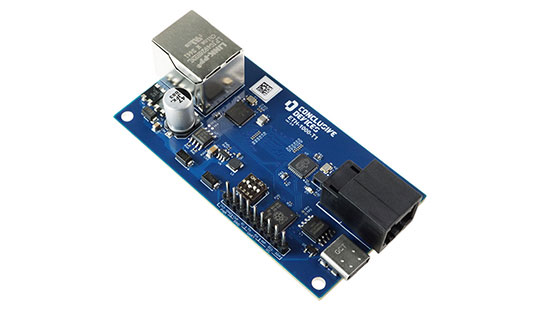
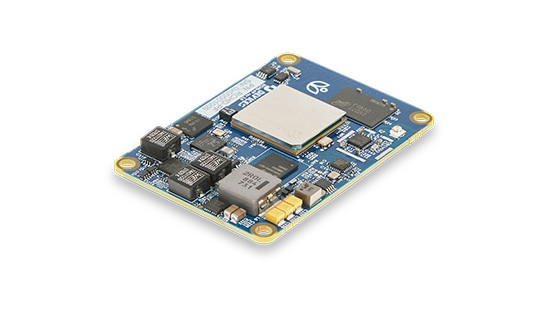
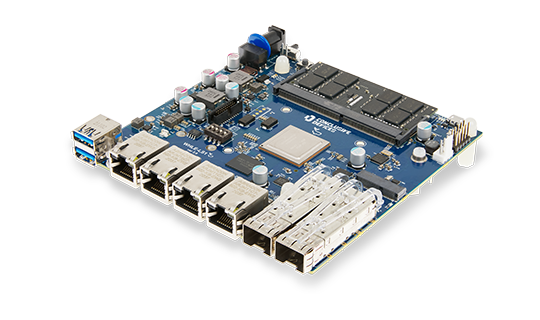
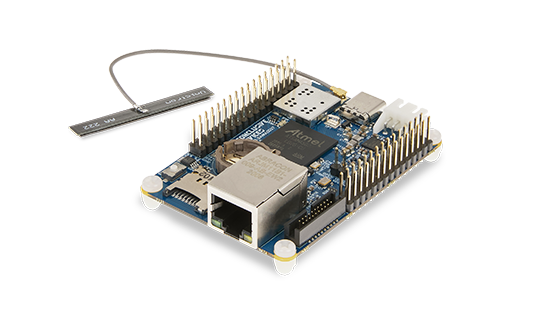
A System on Module (SoM) is a compact, pre-integrated computing unit that contains the core components of an embedded system, typically a processor (CPU or SoC), memory, power management, and essential peripherals, on a single board. Instead of designing these complex subsystems from scratch, engineers can integrate a SoM into a custom carrier board tailored to their specific application.
 Conclusive Engineering RCHD-PF SoM
In modern embedded product development, SoMs significantly reduce time-to-market, engineering complexity, and risk. They are widely used in industries like IoT, industrial automation, automotive, and medical devices, where rapid prototyping and scalability are critical. By abstracting the most challenging parts of hardware design, SoMs allow teams to focus on differentiation (software, connectivity, and application-specific features) rather than reinventing foundational computing hardware.
Conclusive Engineering makes robust electronic hardware ready for demanding applications.
Shop System on ModulesTechnical Explanation: How a System on Module Works
At its core, a SoM functions as the “brain” of an embedded system. It integrates multiple subsystems that would otherwise require extensive hardware design effort.
Key Components of a SoM
A typical SoM includes:
- Processor / SoC (System on Chip). ARM-based processors are most common (e.g., NXP i.MX, STM32MP1, Qualcomm), though x86-based SoMs are also used for higher-performance applications.
- Memory
- RAM (DDR3/DDR4/LPDDR)
- Non-volatile storage (eMMC, NAND, NOR flash)
- Power Management IC (PMIC). Handles voltage regulation and sequencing for stable operation.
- Connectivity Interfaces
- Ethernet, USB, PCIe
- CAN, UART, SPI, I2C
- Wireless modules (Wi-Fi, Bluetooth, LTE, 5G)
- Optional Accelerators
- GPU / NPU (for AI/ML workloads)
- DSP (for signal processing)
Architecture Overview
Think of a SoM as a modular compute block:
[ System on Module ]

   ├── CPU / SoC

   ├── RAM

   ├── Flash Storage

   ├── Power Management

   └── High-speed Interfaces

           ↓

[ Carrier Board ]

   ├── Connectors (USB, HDMI, etc.)

   ├── Sensors / Actuators

   ├── Custom I/O

   └── Power Input
The carrier board is application-specific, while the SoM remains reusable across multiple products.
How System on Modules are Integrated
The SoM connects to the carrier board via:
- Board-to-board connectors (e.g., edge connectors, mezzanine connectors)
- High-speed interfaces routed through standardized pinouts
This separation allows:
- Hardware reuse across projects
- Easier upgrades (swap SoM without redesigning the full system)
- Faster certification cycles (especially for RF modules)
Common Challenges
Despite their advantages, SoMs introduce certain engineering considerations:
- Thermal management: High-performance SoMs require careful heat dissipation.
- Signal integrity: High-speed interfaces (PCIe, DDR) still need proper layout on the carrier board.
- Vendor lock-in: Switching SoM vendors may require redesign due to pinout differences.
- Long-term availability: Critical in industrial and automotive sectors.
Applications & Industry Relevance
SoMs are widely adopted across industries where embedded systems must balance performance, reliability, and development speed.
1. Industrial Automation
- Human-Machine Interfaces (HMIs)
- PLC controllers
- Edge gateways
Why SoMs?
Industrial systems require long lifecycle support and robust performance. SoMs reduce design risk while enabling scalable deployments.
2. Internet of Things (IoT)
- Smart home hubs
- Industrial IoT gateways
- Edge AI devices
Example:
An IoT gateway using an ARM-based SoM can handle sensor aggregation, edge processing, and cloud communication without requiring a full custom board design.
Read also: 5G Automotive Gateway with Advanced Connectivity Options - Conclusive Engineering Case Study
3. Automotive Systems
- Telematics units
- Infotainment systems
- ADAS edge processors
Why SoMs?
They simplify compliance with automotive standards and enable rapid iteration in evolving architectures like software-defined vehicles.
4. Medical Devices
- Diagnostic equipment
- Patient monitoring systems
- Imaging devices
Key advantage:
Pre-certified SoMs reduce regulatory burden and accelerate time-to-market in highly controlled environments.
Read also: Medical Devices Development Services
5. Consumer Electronics
- Smart displays
- Robotics
- Home automation systems
SoMs allow rapid prototyping and scaling from proof-of-concept to production.
Develop system on modules and other electronic hardware with Conclusive Engineering.
Discover Electronic Design ServicesSystem on Module vs System on Chip vs Single Board Computer
Understanding how SoMs compare to related concepts is essential for selecting the right architecture.
SoM vs SoC (System on Chip)
| Feature | SoM | SoC |
| Definition | Complete module with memory & peripherals | Integrated chip with CPU, GPU, etc. |
| Design effort | Low (plug-and-play) | High (requires full hardware design) |
| Flexibility | High | Limited |
| Use case | Product development | Component-level design |
A SoC is a component; a SoM is a ready-to-use subsystem built around that component.
SoM vs Single Board Computer (SBC)
| Feature | SoM | SBC |
| Customization | High (via carrier board) | Limited |
| Production use | Ideal | Often not optimized |
| Cost at scale | Lower | Higher |
| Examples | RCHD-PF | WHLE-LS1 |
SBCs are great for prototyping; SoMs are designed for production-grade systems.
Read also: What Is a Single Board Computer?
Best Practices: How to Use a System on Module Effectively
To maximize the benefits of a SoM, engineering teams should follow these practices:
1. Choose the Right SoM Early
Consider:
- CPU performance requirements
- Memory capacity
- Industrial vs consumer-grade components
- Long-term availability (10-15 years for industrial)
2. Design a Robust Carrier Board
Even with a SoM, carrier board design is critical:
- Proper power design and filtering
- High-speed signal routing (PCIe, USB 3.0)
- EMC/EMI compliance
This is where hardware design expertise becomes essential.
3. Optimize Firmware and BSP Integration
- Use vendor-provided Board Support Packages (BSPs)
- Customize Linux (Yocto/Buildroot) or RTOS environments
- Ensure security updates and OTA capability
This ties directly into firmware development workflows.
4. Plan for Thermal and Mechanical Constraints
- Use heat sinks or thermal pads
- Ensure airflow in enclosure design
- Validate under worst-case conditions
5. Avoid Vendor Lock-In
- Prefer standardized form factors (e.g., SMARC, Qseven)
- Evaluate second-source availability
Common Mistakes and Pitfalls
Treating SoM as “Plug-and-Play”
While easier than full hardware design, integration still requires:
- Signal integrity validation
- Power sequencing considerations
- Software customization
Ignoring Lifecycle Constraints
Consumer-grade SoMs may be discontinued quickly. Always verify:
- Product lifecycle guarantees
- Industrial-grade availability
Underestimating Software Complexity
Even with a SoM:
- Linux bring-up
- Driver integration
- Security hardening
…can still be significant engineering efforts.
Poor Carrier Board Design
Most system failures originate here, not in the SoM itself.
FAQs: System on Modules
What is the difference between SoM and SOM module?
They refer to the same concept: “System on Module.” The duplication is just naming variation.
Is a SoM better than a custom board?
It depends:
- SoM → faster development, lower risk
- Custom board → optimized cost at very high volumes
Can you upgrade a SoM?
Yes. One major advantage is the ability to:
- Swap to a newer SoM with minimal redesign
- Improve performance without changing the full system
Are SoMs suitable for mass production?
Absolutely. They are widely used in:
- Industrial systems
- Medical devices
- Automotive electronics
Do SoMs support real-time systems?
Yes. Many SoMs support:
- RTOS (FreeRTOS, Zephyr)
- Real-time Linux (PREEMPT_RT)
The Takeaway
A System on Module (SoM) is a powerful abstraction that simplifies embedded system design by packaging complex computing subsystems into a reusable, production-ready module. It allows engineering teams to accelerate development, reduce risk, and focus on product differentiation rather than low-level hardware integration.
For organizations building IoT devices, industrial systems, or advanced embedded products, SoMs provide a practical balance between flexibility and efficiency. However, success depends on proper carrier board design, firmware integration, and lifecycle planning.
At Conclusive Engineering, we help teams leverage SoMs effectively, from hardware design and PCB development to firmware engineering and system optimization, ensuring robust, scalable embedded solutions tailored to real-world applications.