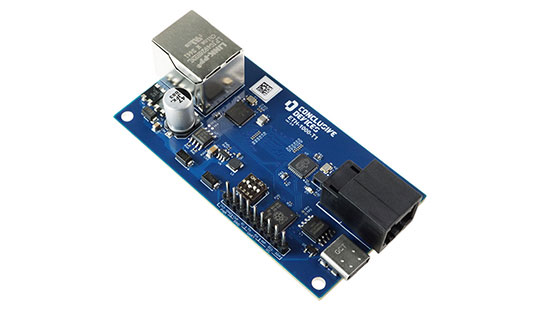
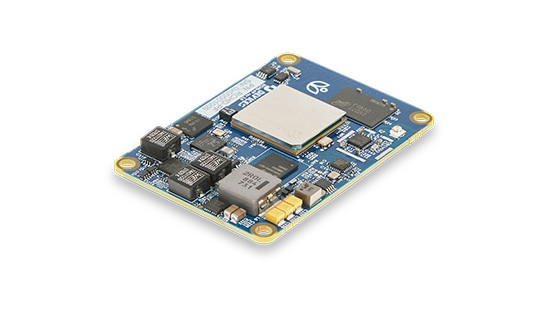
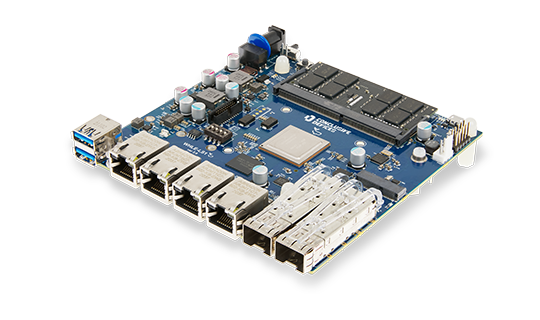
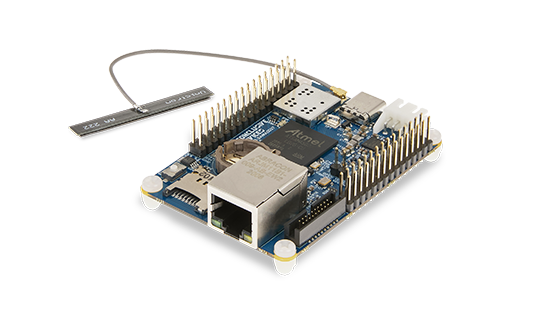
In embedded systems and electronic product development, the terms microprocessor and integrated circuit are often used interchangeably. Incorrectly! While every microprocessor is an integrated circuit, not every integrated circuit is a microprocessor. Understanding the distinction is more than academic: it directly affects hardware architecture decisions, firmware complexity, cost, power consumption, and long-term maintainability.
This distinction becomes critical when selecting components for IoT devices, automotive ECUs, industrial controllers, or medical electronics. Choosing a microprocessor when a simpler IC would suffice, or vice versa, can introduce unnecessary complexity or limit system scalability.
This article explains how microprocessors differ from integrated circuits, how each fits into modern embedded systems, and how to choose the right approach for your product.
What Is an Integrated Circuit (IC)?
An integrated circuit (IC) is a semiconductor device that integrates multiple electronic components, such as transistors, resistors, capacitors, and diodes, onto a single silicon die. The purpose of an IC is to perform a specific electronic function reliably and efficiently.
Key Characteristics of Integrated Circuits
Integrated circuits are defined by function, not complexity. They can be extremely simple or highly sophisticated.
Common categories include:
- Analog ICs – operational amplifiers, voltage regulators, comparators.
- Digital ICs – logic gates, flip-flops, counters.
- Mixed-signal ICs – ADCs, DACs, PMICs.
- Special-purpose ICs – motor drivers, RF transceivers, sensor interfaces
An IC typically:
- Performs a fixed function.
- Has no programmable instruction set (or only limited configuration registers).
- Operates deterministically at the hardware level.
- Requires minimal firmware or none at all.
Where ICs Excel
Integrated circuits are ideal when:
- The function is well-defined and unlikely to change.
- Deterministic timing is required.
- Power efficiency and simplicity are critical.
- Unit cost must be minimized.
Examples include power management ICs in battery-operated devices, CAN transceivers in automotive systems, or sensor front-end ICs in industrial automation.
What Is a Microprocessor?
A microprocessor is a specific type of integrated circuit designed to execute software instructions. It contains a central processing unit (CPU) but typically relies on external components—such as RAM, Flash, and peripherals—to form a complete system.
In other words:
A microprocessor is a programmable, general-purpose IC.
Core Components of a Microprocessor
A typical microprocessor includes:
- CPU core(s)
- Arithmetic logic unit (ALU)
- Control unit
- Cache memory
- Interrupt controller
- High-speed interfaces (e.g., DDR, PCIe, Ethernet)
Unlike simpler ICs, microprocessors are defined by instruction execution, not a single fixed function.
Microprocessor vs Microcontroller (Important Distinction)
Microprocessors are often confused with microcontrollers:
- Microprocessor → CPU-centric, external memory/peripherals
- Microcontroller (MCU) → CPU + memory + peripherals on one chip
Both are integrated circuits, but microprocessors target high-performance, software-driven systems, while MCUs target deeply embedded control tasks.
Read also: Microprocessor vs. Microcontroller: The Differences
Core Differences: Microprocessor vs Integrated Circuit
1. Scope of Functionality
| Aspect | Integrated Circuit | Microprocessor |
| Primary role | Fixed electronic function | General-purpose computing |
| Programmability | None or minimal | Fully programmable |
| Software dependency | No | Yes |
| Functional flexibility | Low | High |
An IC, like a voltage regulator, performs one task exceptionally well. A microprocessor performs many tasks, defined by software.
2. System Architecture Impact
Using a microprocessor fundamentally changes system design:
IC-based design
- Hardware-defined behavior
- Minimal firmware
- Simple validation
- Lower BOM complexity
Microprocessor-based design
- Software-defined behavior
- Requires firmware development
- OS or RTOS often involved
- More complex boot, security, and update flows
This is where firmware development and embedded Linux expertise become critical, especially in connected or safety-critical products.
3. Performance and Determinism
Integrated circuits often provide:
- Hard real-time behavior
- Predictable latency
- Minimal jitter
Microprocessors offer:
- Higher compute performance
- Parallelism and multicore scaling
- Virtual memory and advanced OS features
However, deterministic timing on microprocessors often requires:
- RTOS configuration
- Hardware acceleration
- Careful interrupt and DMA design
Applications and Industry Relevance
Automotive Systems
- Integrated circuits handle power regulation, CAN/LIN transceivers, motor drivers.
- Microprocessors run infotainment systems, ADAS pipelines, gateway controllers.
In automotive-grade designs, microprocessors are often paired with multiple supporting ICs to meet functional safety and EMC requirements.
Industrial Automation
- ICs manage signal conditioning, isolation, and fieldbus interfaces.
- Microprocessors enable edge computing, predictive maintenance, and protocol translation.
Industrial systems often combine deterministic ICs with microprocessor-based controllers for scalability.
IoT and Edge Devices
- Low-power ICs dominate sensing and power management
- Microprocessors enable:
- Secure connectivity
- OTA updates
- Edge analytics
Here, the trade-off between power consumption and software flexibility becomes central.
When Should You Use a Microprocessor Instead of a Simpler IC?
Choose a microprocessor if:
- Product functionality will evolve post-deployment.
- You need complex networking stacks (Ethernet, Wi-Fi, cellular).
- The system requires rich user interfaces.
- Security features (secure boot, encryption) are mandatory.
Choose dedicated ICs if:
- Functionality is fixed and well-defined.
- Power and cost are tightly constrained.
- Hard real-time behavior is critical.
- Certification complexity must be minimized.
In practice, most modern embedded systems combine both.
Common Mistakes Engineers Make
- Overusing microprocessors for simple control tasks.
- Underestimating firmware complexity in microprocessor-based systems.
- Ignoring lifecycle costs (maintenance, updates, security).
- Assuming ICs cannot scale. Many modern ICs offer advanced configurability.
Quick Checklist: IC or Microprocessor?
- Do you need software-defined behavior? → Microprocessor
- Is deterministic timing critical? → Likely IC or MCU
- Will the product receive OTA updates? → Microprocessor
- Is ultra-low power required? → Dedicated IC
- Is the function safety-certified? → Often IC-based logic
FAQs
Is a microprocessor an integrated circuit?
Yes. A microprocessor is a type of integrated circuit, but with programmable computing capability.
Can an embedded system work without a microprocessor?
Absolutely. Many embedded systems rely entirely on fixed-function ICs or simple microcontrollers.
Are microprocessors replacing traditional ICs?
No. They complement each other. As systems grow more complex, the number of supporting ICs typically increases alongside the microprocessor.
Microprocessor Vs. Integrated Circuit: Conclusion
The difference between a microprocessor and an integrated circuit lies in programmability, system role, and architectural impact. Integrated circuits provide efficient, deterministic functionality, while microprocessors enable flexible, software-driven systems.
Successful embedded products rarely choose one or the other in isolation. Instead, they combine microprocessors with carefully selected ICs to balance performance, reliability, power, and cost.
At Conclusive Engineering, this balance is central to our work in hardware design, firmware development, and edge computing systems. Making the right architectural choice early reduces risk, accelerates development, and ensures long-term scalability.